This page walks through the core borrowing path. A small deposit, a modest borrow, and what to expect as redemptions reduce your balance over time.
- Deposit ETH or USDC to mint MYT and start earning yield.
- Borrow at about 20% LTV to mint alAssets, then swap them to USDC if you want working capital. (The protocol allows up to 90% LTV; this guide uses ~20% as a conservative starting point.)
- Watch scheduled redemptions reduce your debt while your collateral keeps earning underneath.
If you already know what you're looking for, jump straight to the relevant tutorial:
Prerequisites
Connect a wallet on the target chain and keep a small balance of the native gas token. Hold ETH or USDC for your deposit.
Step 1 – Deposit to the MYT
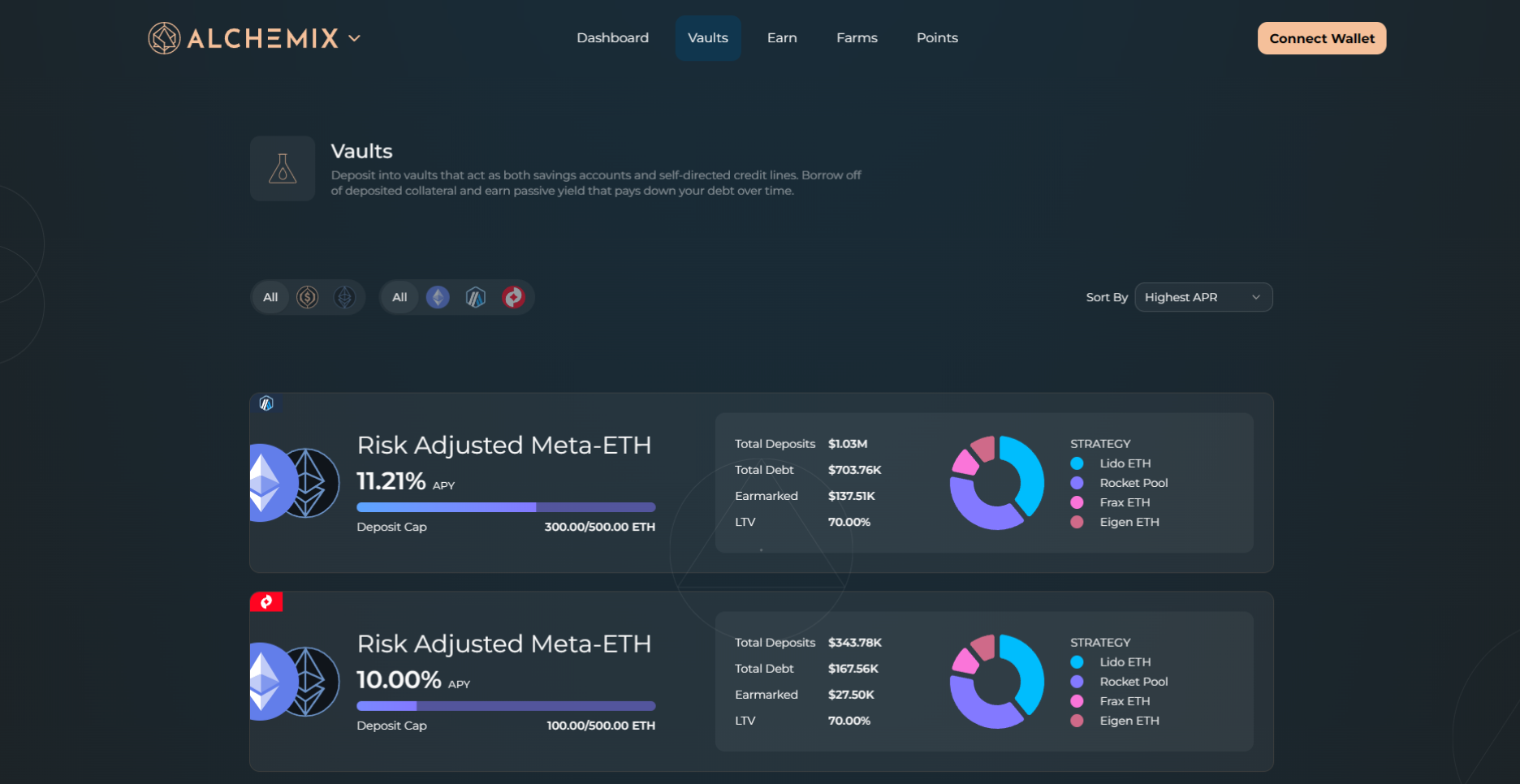
Open Borrow, choose a Risk Adjusted Mix vault for ETH or USDC on your chain, and deposit. The vault mints MYT at a rate equivalent to your underlying assets. From here on out, each MYT represents a growing claim on the underlying as strategies earn.
Step 2 – Borrow at 20% LTV
alAssets can trade slightly below 1:1 on the open market. If alUSD trades at 0.99 USDC, selling 200 alUSD yields ~198 USDC, which is a ~$2 upfront cost relative to your 200 alUSD of recorded debt. The Trade → Swap page shows the current price and estimated proceeds before you confirm.
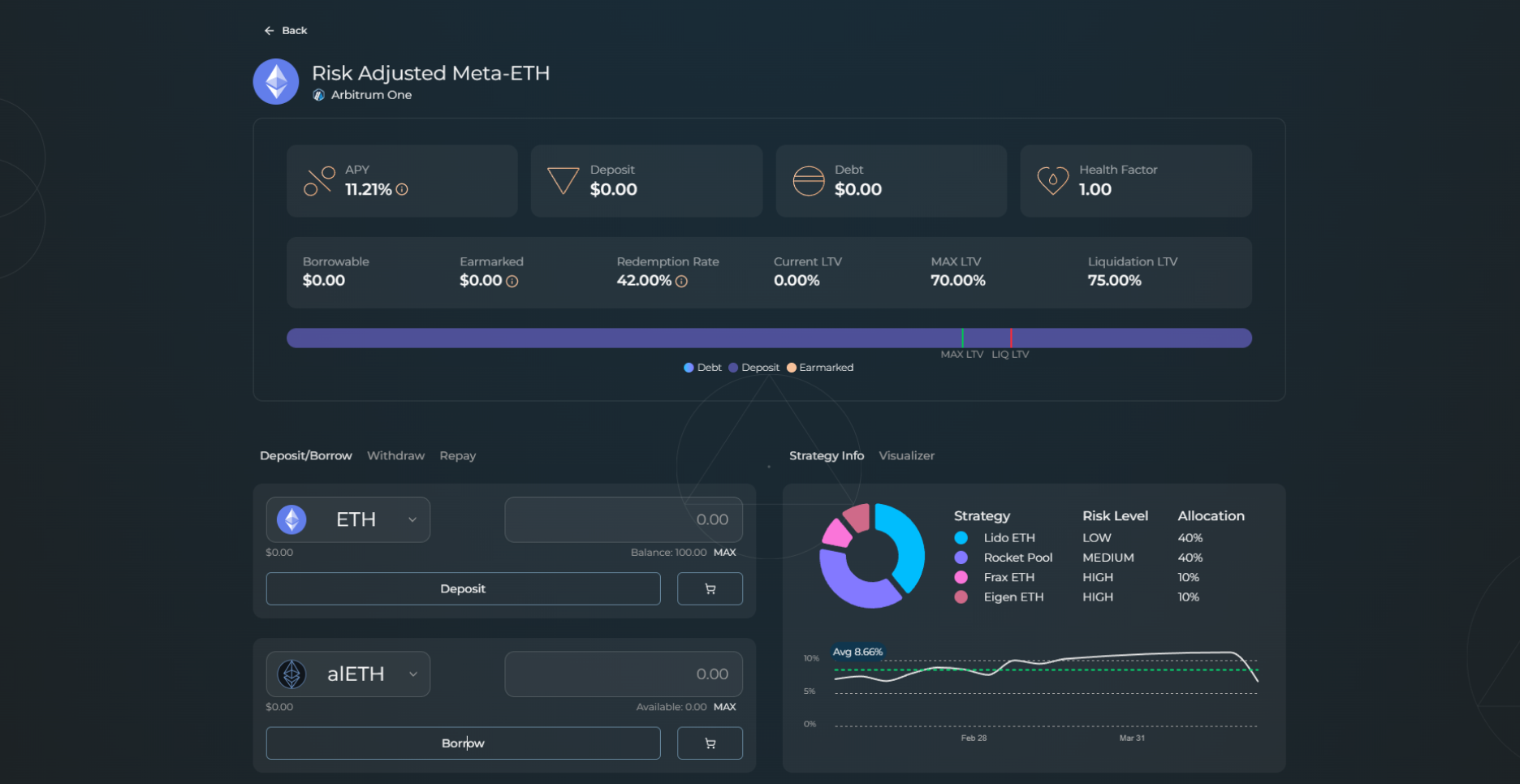
On the same vault page stay on Deposit/Borrow. Enter a borrow near 20% LTV, then mint alETH or alUSD, respectively.
If you need spendable funds, swap the alAsset to USDC, or choose USDC as the borrow asset and the app swaps it for you in the same flow. Each redemption charges a small borrower fee on the amount redeemed, and on that amount only. See Fees.
- Strategy mix: open the vault's Info panel to see the strategies the MYT is deployed in, with each one's risk level and allocation.
- Health bar: note the Liquidation LTV marker. Keep a wide buffer to reduce the need for active position management.
Step 3 – Let it run
The visualizer below projects how the position plays out. It tracks three lines over the term: your Deposit (collateral, earning yield), your Debt (paid down by scheduled redemptions), and your Net Value, which here is simply deposit minus debt. Adjust the yield, redemption rate, alAsset price, and duration to see how the loan settles itself. No repayments, no interest, no action required.
The live version on a vault's Visualizer tab runs on your own position and the Transmuter's real near-term redemption schedule, and adds an External APY input for modeling the loan earning yield outside Alchemix. With that above zero, which is its default, Net Value counts those returns as well.
Next steps
Explore the concepts behind what you just did:
Or go deeper with the step-by-step tutorials: